International Logistics Management
Logistics management on a global scale requires a lot more than just moving goods — it is about multitasking, following regulations, and tracking shipments all over the world.
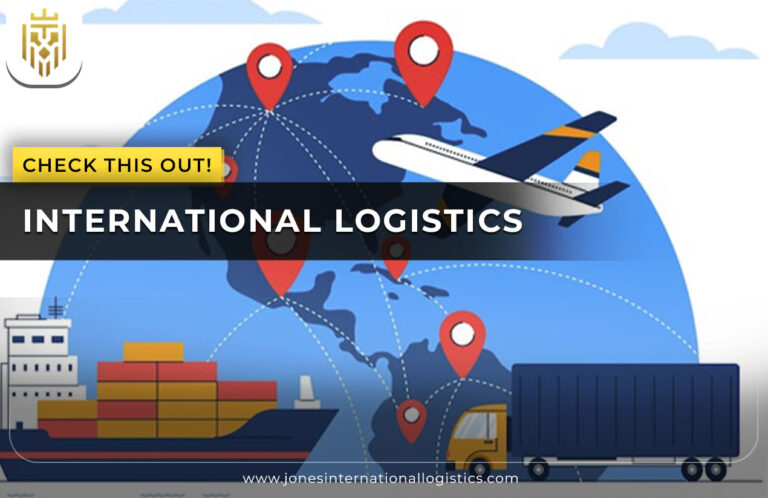
International logistics management entails moving goods over borders with thorough planning, execution, and control. It combines supply chain strategies, transportation, documentation, and customs procedures to be compliant and deliver goods on time. Such a process calls for thorough scheduling and coordination among shippers, freight forwarders, and customs brokers for the least possible disruptions.
Good management also depends on data-backed insights that monitor performance and risk associated with global operations are being reduced. Companies that are involved in structured logistics management will have better visibility, lower costs, and happy customers.
Importance of International Logistics
Mediocre or inefficient international logistics could be a major hindrance to the global market that would have otherwise resulted in the growth of trade among countries.International logistics has great importance, as it is the means that connects manufacturers and users over long distances very effectively. It makes global trade possible by getting the raw materials, parts, and finally the finished goods to their places in time.
It is no longer just transportation that ties nations together, as it is also used to create strong international bonds and lure business to new markets. A proper logistics system cuts down costs and uncertainties due to politics or economics that the business might be large. Eventually, it becomes the mainstay of globalization, enabling companies to be there everywhere – competing and collaborating.
Key Components of International Logistics
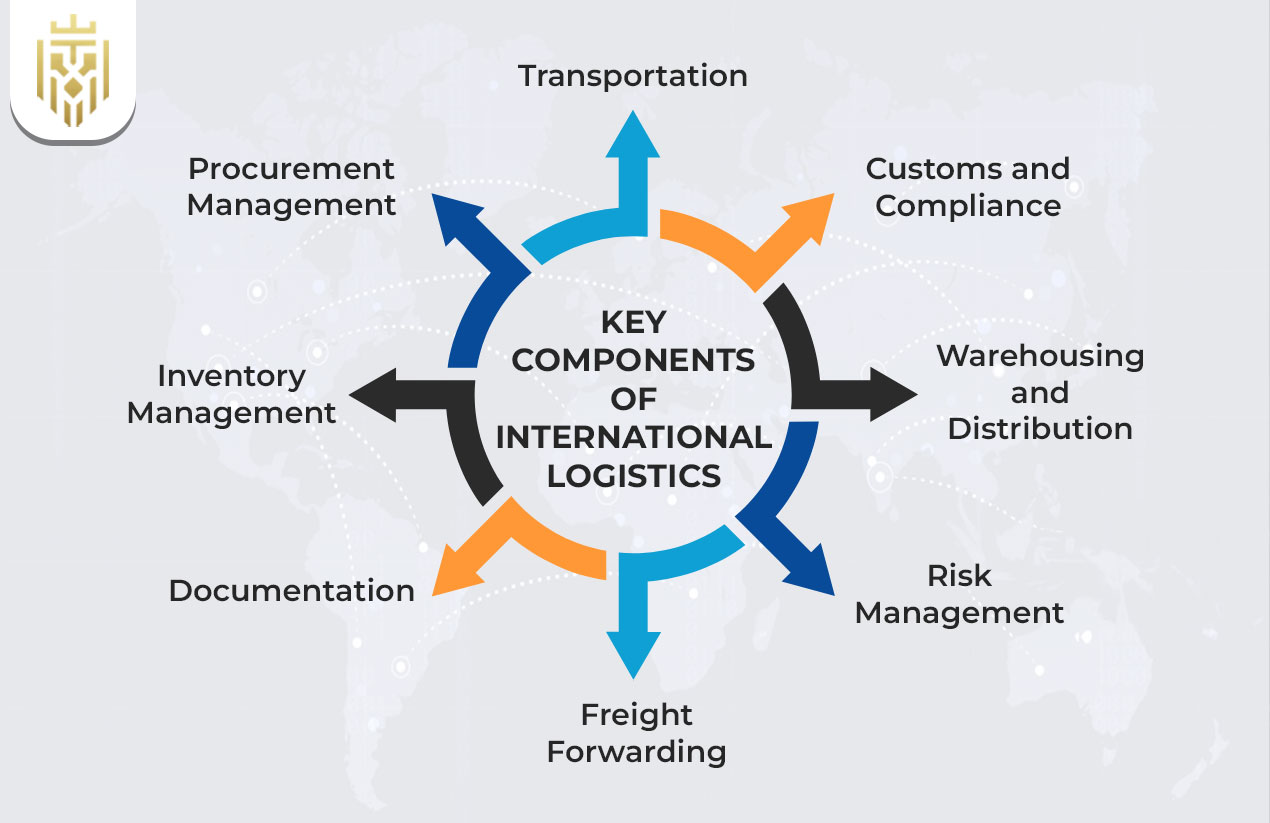
Every successful international logistics system is built on essential components that ensure seamless cross-border movement and management.
Transportation
Transportation is the cornerstone of international logistics, which includes the networks of air, sea, rail, and road that transport goods around the world. Every mode has its own pros and cons depending on the size, urgency, and cost of the shipment. Sea freight is still the most economical for bulk shipments, but air freight is the fastest for high-value or time-sensitive products. Choosing the proper mode requires analyzing trade routes, dependability, and the environment. Smart transport planning makes sure that the goods arrive at their places within the time and cost limits.
Customs and Compliance
Handling customs and compliance regulations is crucial for getting hassle-free cross-border trading done. Each country has a specific set of rules for import and export that businesses have to abide by to prevent getting fined or delayed. Compliance involves having the correct paperwork, paying taxes, and figuring out tariff classifications. Working with skilled customs brokers helps firms efficiently manage these intricate matters. Being compliant not only guarantees compliance with the law but also promotes the company’s reputation in overseas markets.
Warehousing and Distribution
Warehousing and distribution are the crucial supports that facilitate the movement of products between the countries. International logistics relies upon warehouses that are ideally located with respect to markets to shorten delivery times and cut down storage costs. Good warehousing techniques take care of managing stock levels, order processing, and packing customized for overseas shipping. The distribution network also takes care that the goods reach the consumers or retailers without any delay. A good warehousing setup improves tracking and decreases the chance of running out of stock.
Risk Management
Global trade is a source of many risks for companies such as delays, theft, damage, or interruptions due to political reasons. Risk management consists of recognizing the possible trials and preparing backup plans to lose the least possible. The use of insurance, diversification of transportation routes, and strong supplier connections are just some of the methods that companies apply to protect their operations. Keeping track of political trends and changes in currency values is also a caretaking way of making the right decisions. Good risk management is what keeps international logistics activities stable and strong.
Freight Forwarding
Freight forwarding is the connection that coordinates shippers and carriers in the global shipment chain. The freight forwarder’s work includes logistics planning, negotiation of transport rates, and checking documentation correctness. In this case, the freight forwarders act as intermediaries and make the flow of goods smoother regardless of what transport mode the goods are in. Through the freight forwarders contributions, the companies are saving money and having an easier time with the paperwork. The ties with the trustworthy forwarders make the shipments more reliable and the companies more connected to the world.
Documentation
Correct documentation is a guarantee for unproblematic and lawful international trade activities. The most important documents are bills of lading, commercial invoices, certificates of origin, and export licenses. These papers are the proof of ownership, value, and conformity with the trade laws. Mistakes or lack of paperwork can lead to delays or fines, which makes it very important to be attentive to the details. Good document management helps to be open and quick in customs clearance.
Inventory Management
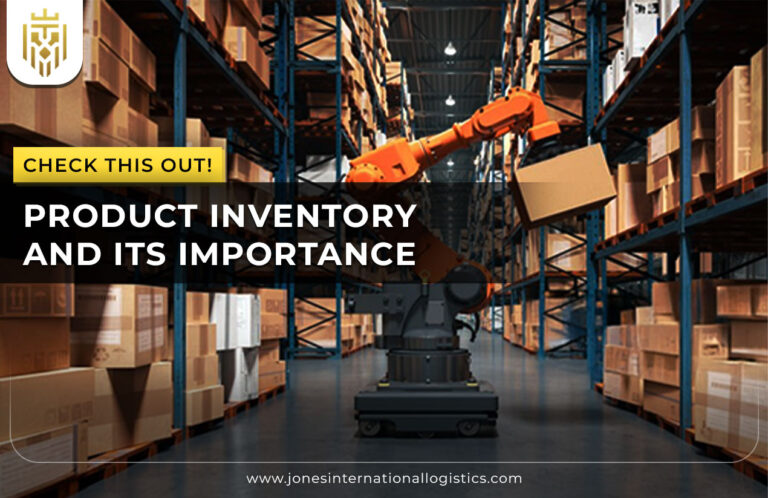
Inventory control in international logistics guarantees that the proper quantity of stock is readily available to satisfy global demand. Companies are in a continuous movement between overstocking, which raises costs, and understocking, which leads to lost sales. Technologies like real-time tracking and automated systems create the transparency necessary to see the inventory levels across the globe. Effective inventory management not only decreases storage costs but also makes quick restocking possible. This global synchronization contributes to the smooth running of operations and the satisfaction of the customers in the world’s different regions.
Procurement Management
Procurement management addresses the issue of sourcing materials or products from suppliers around the world. It mainly deals with the identification of trustworthy vendors, the covering of contracts, and the enforcing of compliance with quality standards. Good procurement strategies take into account factors like lead times, currency fluctuations, and supplier performance. The partnership between procurement and logistics introduces greater supply chain visibility and lower costs. Strong procurement management, in the end, yields global rivalry advantages and supply security.
Goals of International Logistics

The primary objectives of international logistics are reliability, cost control, and supply chain performance enhancement.
Reliability
Reliability guarantees safe delivery and timely arrival of goods to their intended destinations. International logistics, where reliability is a key factor, can win trust among customers and partners. Reliability is built with proper and transparent communication, like seamless technology, strategic planning, and effective transportation. Digital tracking and predictive analytics are some of the ways to increase the accuracy of delivery. Companies that are reliable will eventually get the chance to create partnerships worldwide up to the extent of customer loyalty already built.
Cost Efficiency
Cost efficiency means keeping prices low while at the same time ensuring quality of service remains high. One major way to reduce costs is by making a choice of the most economical transport modes, consolidating shipments, and securing good contracts with the carriers. The technological integration also helps in cutting down administrative and operational overheads. The close monitoring of trade tariffs and fuel prices will also help in planning the budget properly. The cost-effective logistics give the businesses the power to set competitive prices in international markets.
Streamline Supply chain process
The supply chain process that is streamlined has no delays and no redundant steps in logistics anymore. Automation, digital tracking, and departments working together are some of the methods used to enhance workflow efficiency. Having common practices among different regions helps in controlling quality and regulatory compliance. Simple logistics activities lead to fewer mistakes hence, reliability of service is increased. Consequently, quicker turnaround and better scalability in the global market are some of the results that companies experience.
Challenges in International Logistics
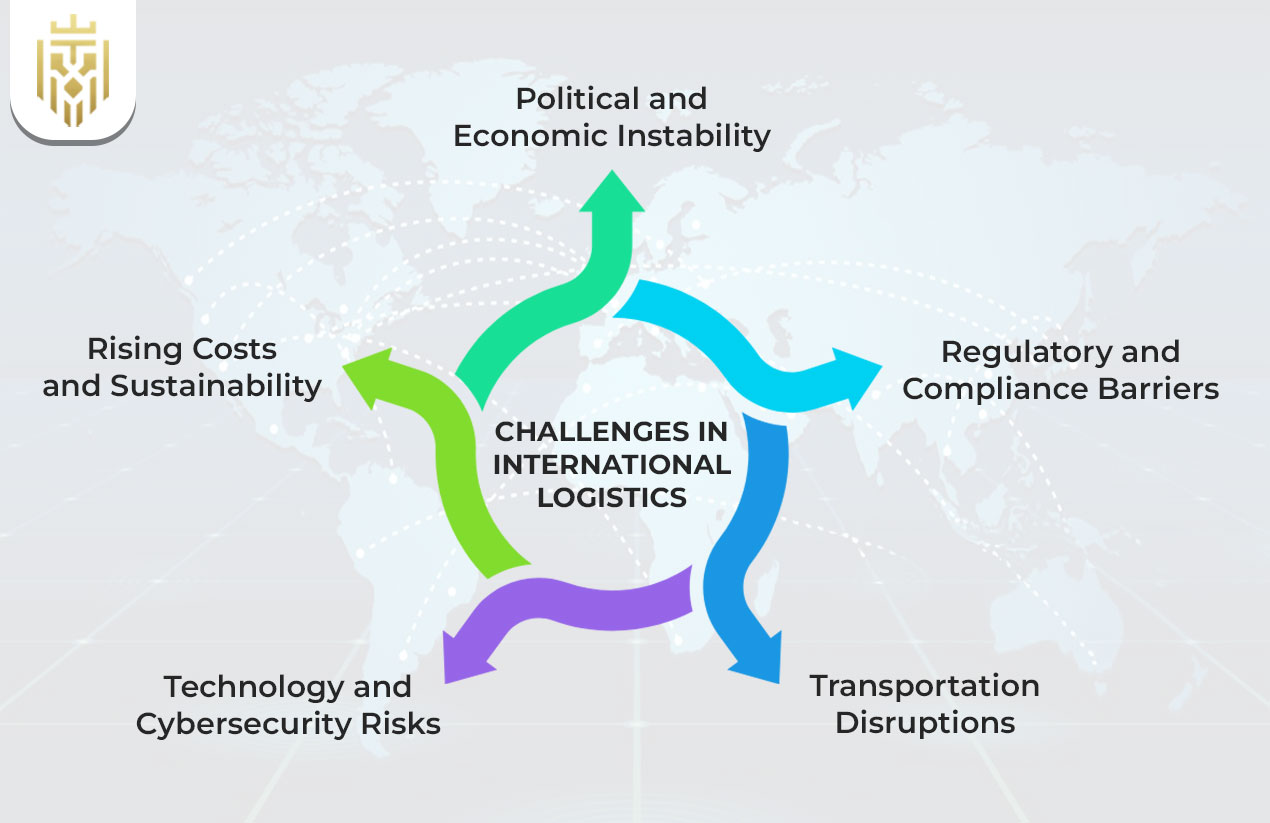
While international logistics drives trade efficiency, it also faces several operational, political, and technological challenges.
Political and Economic Instability
When there are political and economic fluctuations, international logistics operations are very likely to be disrupted. Trade sanctions, tariffs, or sudden policy changes may be reasons that cause delays in shipping or, render it more expensive. Thus, companies have to be constantly monitoring the geopolitical situation in order to be ready for possible disruptions. On the other hand, the companies’ actions of reducing dependence on unstable regions by diversifying their supplier bases and keeping different transport routes open prove to be very effective. Proactive planning is among the methods to help maintain the operation of logistics and supply chains irrespective of global uncertainties.
Regulatory and Compliance Barriers
One of the biggest hurdles in logistics is the need to comply with intricate regulations governing international trade. As a rule, each nation has its own requirements in terms of documentation, safety, and environmental standards. If a company fails to comply with these regulations, it can face heavy fines, its shipments can be delayed, or its image can be damaged. Companies put in place compliance management systems and engage expert consultants to keep themselves informed of the changing laws. This way they can continue to be compliant and thus be able to maintain smooth and fast trade operations.
Transportation Disruptions
Most of the time, international shipments are delayed because of transport disruptions, such as congestion in ports and strikes of carriers. The situation is made worse by things like severe weather, equipment breakdowns, and lack of capacity. Companies are implementing modern techniques for planning their routes and building partnerships with various carriers to minimize these risks. Along with that, technology-based visibility platforms are available that enable real-time tracking and rerouting of shipments. The skillful management of such disruptions guarantees a constant level of delivery performance.
Technology and Cybersecurity Risks
Cybersecurity threats have become more visible as logistics operations are rapidly transforming to digital formats. Supply chains can lose their visibility and even suffer reputational damage due to data breaches, ransomware attacks, or system malfunctions. It becomes necessary to invest in a secure IT infrastructure and in continuous monitoring, as well as to provide cybersecurity awareness training to staff. Strong cybersecurity measures will not only preserve trust but also help in keeping the flow of goods and services in international trade moving.
Rising Costs and Sustainability
International logistics budgets are challenged by rising fuel prices, inflation, and green pressure. Hence, companies have to strike a delicate balance between the implementation of eco-friendly practices and the reduction of costs. Sustainable logistics can be supported by the switching to alternative fuels, optimizing routes, and using recyclable packaging. The brands’ reputation can be improved and even the market share can be increased by adopting long-term sustainability strategies. Eco-friendly logistics can be a source of competitive advantage for the businesses operating in global markets.
Strategies for Effective International Logistics Management
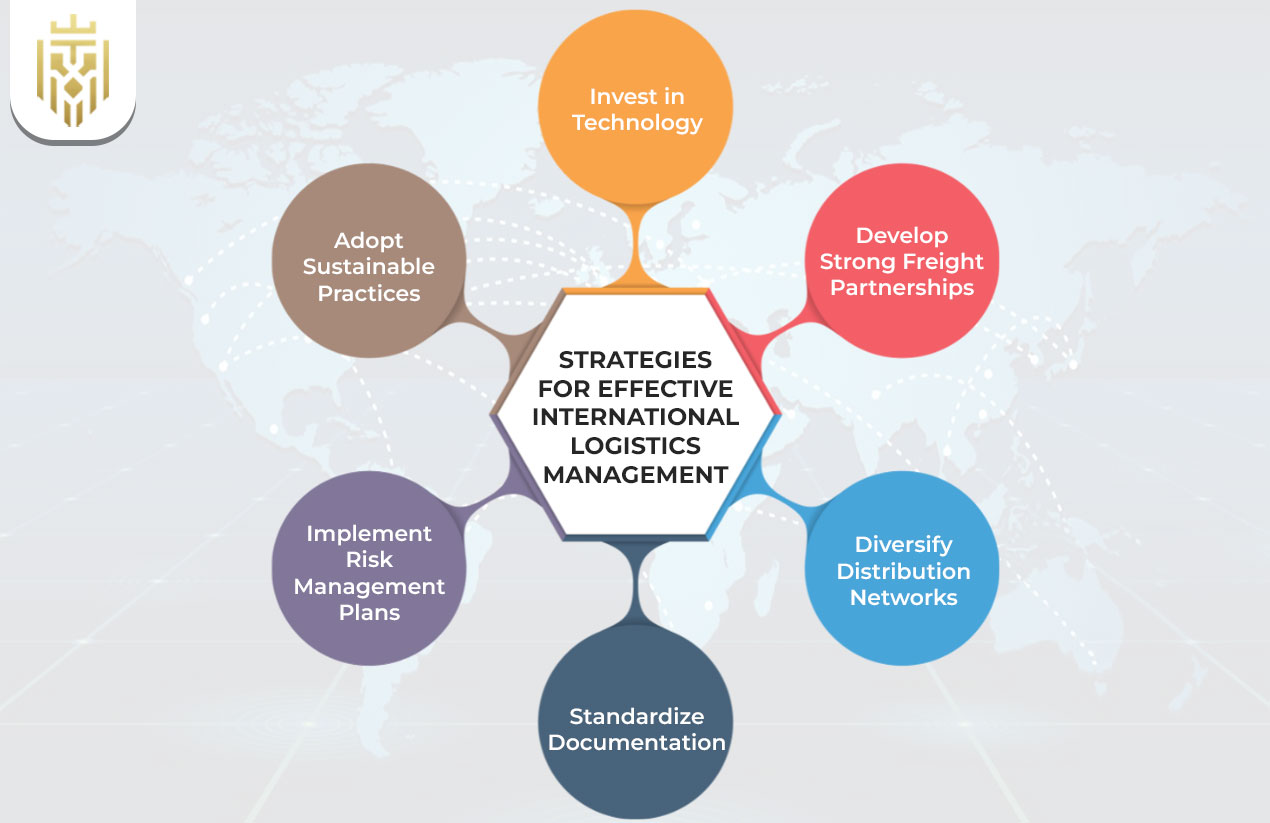
Managing global logistics successfully requires a blend of technology, planning, and sustainability-focused strategies.
Invest in Technology
International logistics is enhanced to a great extent through the use of technology as it provides visibility and control in real-time. Technologies like TMS (transportation management system) and WMS (warehouse management system) increase the efficiency of operations by making decisions. Predictive analytics are of great help to estimate the demand and accordingly schedule the shipments so as to avoid delays. By investing in digital solutions, companies ensure that their operations will be accurate, transparent, and problems will be solved quickly. The use of technology in logistics creates smart and quick-reacting global supply chains.
Develop Strong Freight Partnerships
Reliable transport services and better cost negotiations are guaranteed by strong freight partnerships. The collaboration with trustworthy carriers and freight forwarders brings stability to the operations. Such partnerships make it possible for businesses to react immediately to the fluctuations in trade demand or to the disruptions. The mutual faith in the partnership also makes it easier to coordinate shipments across borders. Long-term freight relationships are the basis of consistent global logistics performance.
Diversify Distribution Networks
Reducing dependency on particular routes or regions is one of the main reasons why companies should diversify their distribution networks. By building cross-country hubs and regional warehouses, firms are able to be flexible during the creation. This method not only enables quicker customer service but also optimises the inventory flow. Companies will be able to adapt to the market changes more easily if they spread their operations across different locations. The capability of a diversified distribution structure in terms of resiliency and global reach is significantly increased.
Standardize Documentation
Standardized documentation simplifies customs clearance and reduces errors of administration to the minimum. The use of standard forms in different markets makes it easier to trade compliance. Besides that, applying digital document management systems greatly contributes to the accuracy and availability. Therefore, standardization speeds up the clearance and decreases the number of ways through which the communication between the partners can get lost. Thus, the very efficient documentation is a great support for the smooth running of the international business.
Implement Risk Management Plans
Through a comprehensive risk management plan, a company is prepared for potential disruptions in the logistics chain. Usually, these plans consist of effective strategies, insurance coverage, and constantly checking global trends for any possible impact of logistics on the business. Moreover, companies evaluate the trustworthiness of their suppliers, the political situation in the country, and transport conditions on a regular basis. The implementation of risk management frameworks also allows for quicker recovery during emergencies. A systematic approach lessens the impact and enables the company to continue operating.
Adopt Sustainable Practices
Sustainability is becoming a major factor in the international logistics sector. Efforts to reduce the carbon footprint of companies are made through various means such as green packaging, route optimization, and energy-efficient vehicles. Working with eco-friendly transportation companies is indeed partnering up with environmentally responsible players in the logistics sector. Moreover, today’s sustainable logistics practices are a point of attraction for customers and investors who are keen on businesses operating in an ethical manner. The long-term resilience and good reputation of a company in the global market are the major results of embracing sustainability.
FAQs
1) What is the difference between international and domestic logistics?
International logistics is concerned with the management of shipments that cross international borders and are subject to customs regulations, longer transit times, and complex documentation whereas domestic logistics is concerned with the movement of goods within one country and uses simpler methods.
2) What documents are essential for international logistics?
The major documents required are the bill of lading, commercial invoice, packing list, certificate of origin, export license, and insurance certificate, which are all necessary for compliance and customs clearance non-stop.
3) How can companies improve sustainability in international logistics?
Global players can resort to the use of transport that consumes less fuel, non-polluting materials, and electronic systems that are very efficient in reducing paper use emphasizing that their operations are not harmful to the environment.
4) What role does customs brokerage play in global logistics?|
Brokers take care of the import and export compliance, handle the documents, and make it quicker through the complex international trade regulations for the goods to be cleared.
5) Why is supply chain visibility crucial in international logistics?
Visibility permits firms to monitor their products during the transportation process, predict disturbances, and act accordingly in a timely manner thus ensuring reliability and openness throughout the global operations.