Cross Border Logistics Meaning
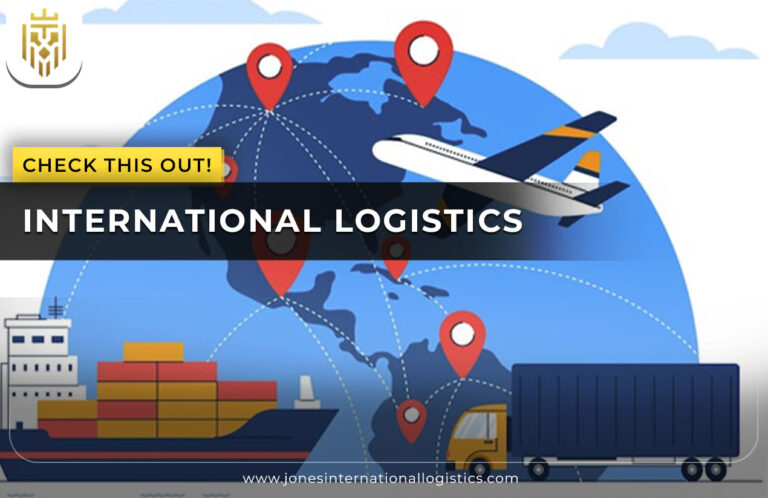
Cross border logistics is the term used to describe the very intricate and multifaceted management of the whole process of taking goods, information, and payments from one sovereign nation to another through an elaborate network. This area has been developed to include more than just the mere movement of goods; it has become the whole planning, implementation, and control of the movement process that is efficient, cost-effective, and, moreover, legally compliant in all the different international jurisdictions.
Conversely, domestic logistics that is managed under a single regulatory umbrella would not have to face the complicated scenarios rather it would have the straightforward customs procedures, stable exchange rates, same infrastructure standards, and a simplified set of international trade laws. Companies that want to enter and compete in global markets of today must be well-versed in this area of logistics, thereby making it a necessity rather than a luxury to understand its intricate mechanisms.
Operations included in cross border logistics

The seamless execution of international trade relies on the meticulous coordination of several distinct, yet interconnected, operations. These specialized activities collectively ensure that a shipment can successfully navigate the complexities inherent in traversing international boundaries.
Export and import documentation
Documentation is the mainstay for every international shipment. It contains invoices, packing lists, bills of lading, certificates of origin, and trade licenses. Properly prepared documents not only ensure compliance with the law but also avoid customs delays and fines. Besides, companies that keep accurate documents are also able to offer more visibility and monitoring in their logistics operations.
Customs clearance
Customs clearance is the most vital point in the logistics of cross-border trade. It is the process of presenting the required documentation and paying the duties or taxes of the destination country. Customs delays are a real threat to supply chains, thus, efficient clearance with the support of capable agents always guarantees unhindered moving and delivery.
Warehousing and distribution
Warehouses, which are well-located close to the ports or border points, are among the most important factors in international logistics. They aid in the efficient storage, consolidation, and distribution of goods across regions. The use of bonded warehouses also permits businesses to put off paying the tax until the goods are sold, thereby providing better cash flow management.
Trade compliance
All nations have their specific laws related to trade and which govern the flow of goods and services across their borders. Trade compliance is the measure that enables the companies to abide by these laws, e.g., product limitations, embargoes, and tariffs. Observing these rules will not only keep the company out of trouble but also save it from incurring reputational damage that can be hard to eradicate.
International shipping coordination
International shipping coordination means choosing the best transport modes; air, sea, rail, or road ; cost-effective and time-sensitive. This coordination covers the managing of carriers, routes, and transit times to make the deliveries that are to be made on time. Modern technology platforms are now offering real-time visibility and automated scheduling to streamline the process.
Importance of Cross Border Logistics
Market Expansion
Logistics across borders to the world opens up a global opportunity for all. It allows the businesses for the new markets to be, the customers of international to be reached, and the revenue streams to be diversified. For some manufactures and retailers, the step of enlarging the market beyond the local one could be the next to g come up as a potential. Cross border logistics of the best practices would allow companies to ship their products even to the other half of the planet without compromising on quality and service standards. The expansion of the market not only increases the recognition of the brand but also makes the company strong against the regional economic fluctuations, thus giving the business a competitive advantage in a globalized market.
Cost Optimization
Cost management is certainly a top issue in logistics global. The good management of cross-border logistics helps the firms to cut their operational costs by the means of the best possible routing, consolidating loads, and controlling the inventory in a strategic way. In addition to this, the firms choose to work with the logistics partners that are reliable and thereby they can reap the benefits of the economies of scale, make the negotiations of the freight rates in their favor and lowering the costs of storage and transportation. The use of advanced analytics tools allows the firms to spot the inefficiencies arising and to implement the improvements based on data. In the environment where fuel prices and trade tariffs are subject to constant changes, the logistics management strategy that focuses on cost optimization will take the position of a profit making factor.
Customer Satisfaction
Customer satisfaction continues to be the basis for success in international trade. Today’s consumers demand not only fast deliveries but also open tracking and fast communications irrespective of the borders. Express cross border logistics services are the major players in making these expectations realistic by providing the customers with faster and reliable delivery updates. When businesses supply the products within the period promised and in perfect condition, they earn customers’ trust and loyalty. The customers’ perception of the brand is directly impacted by the logistics operations and consequently, the company’s presence in international markets is enhanced by its credibility.
Supply Chain Efficiency
Supply chain efficiency indicates the level of competence an organization has in regulating the international flow of goods, information, and finances. The cross border logistics assure this efficiency by bringing multiple stages—from procurement to final delivery—into one, well-organized system. An effectively run supply chain will cause fewer delays, higher precision, and less waste. Technology and cooperation play a pivotal role in obtaining this aim. Firms that employ digital tracking, predictive analytics, and automation can quickly react to disturbances and carry out their operations smoothly, even when the conditions are tough.
Components of Cross Border Logistics
Customs Clearance
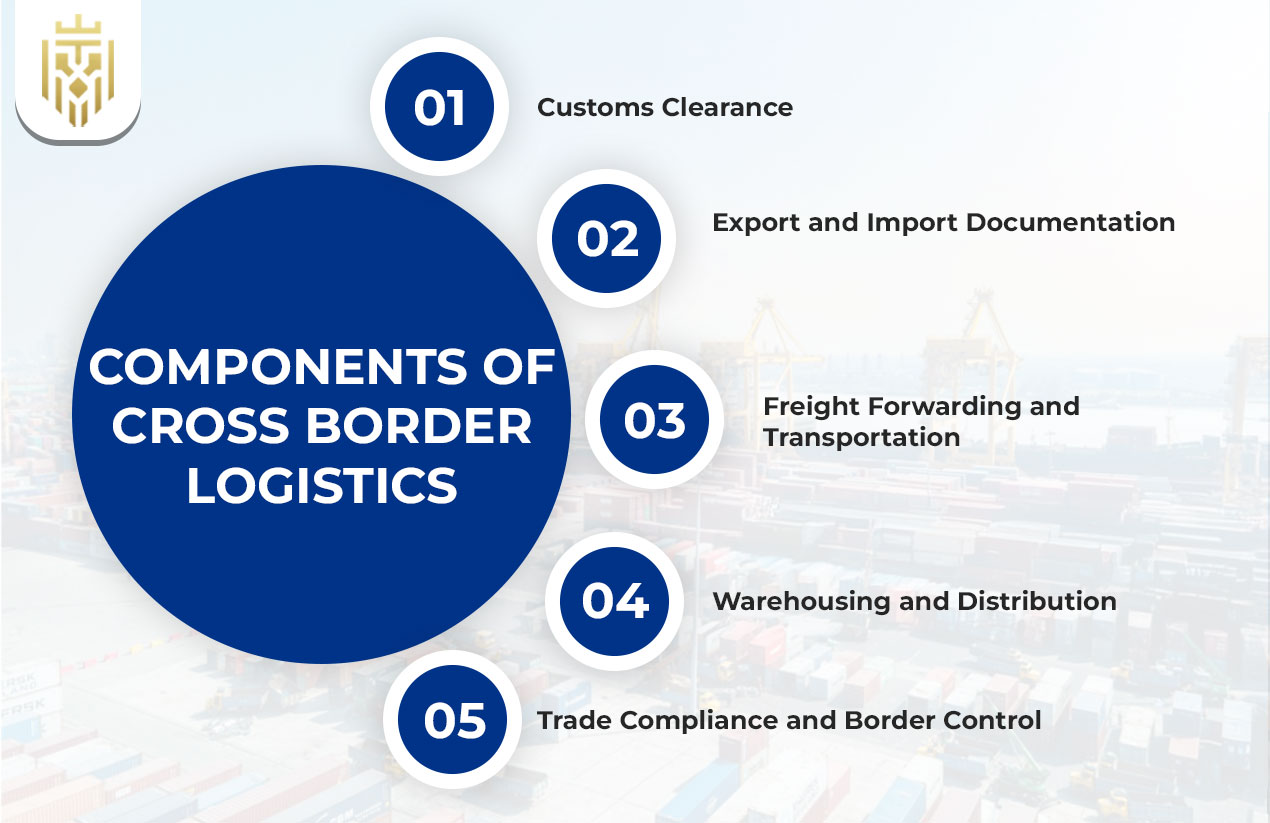
Customs clearance acts as the main entry point between nations in international trade. If the clearance is not done properly, then the goods would not be allowed to enter or exit the market legally. The logistics firms that focus on customs operations take care of the paperwork, customs duties calculation, and communication with the customs officials. Automated clearance systems along with the skilled brokers quicken this process thus stopping the occurrence of huge delays. Good customs management not only leads to faster delivery times but also gives more predictable and compliant costs.
Export and Import Documentation
Documentations precision is the key to international trade success. Every export must come with a detailed assembly of export and import papers that declare the product, its origin, and worth among other things. It is the job of the logistics department to make sure that the set of documents meets the requirements of both governments involved. If the docs are not consistent or are incomplete, this could mean clearing it up in the end or even getting into legal troubles. The companies that adopt standard documentation processes become less risky and more steady in their global operations.
Freight Forwarding and Transportation
The functions of freight forwarding and transport make the plans for logistics practical. Freight forwarders are the intermediaries between the shippers and the carriers, coordinating the movement of the goods and making sure that they arrive at the right place at the right time. They take care of the international shipping intricacies like choosing the best shipping routes and carriers and taking out cargo insurance while still managing to cut down on costs and increase the efficiency at the same time. Transportation includes several modes, each with its own unique benefits. Air freight is the fastest, ocean freight is the largest and road transport is the most connected regionally. The best cross-border logistics systems are those that have combined these modes strategically to reach a balance between speed and cost.
Warehousing and Distribution
Warehousing and distribution are the operational backbone of cross border logistics. A good global trade hinges on having dependable storage spots and flexible distribution channels. The warehouses that are right next to the major ports or at the borders help in cutting down the transit time and enhancing the responsiveness to the market demand. Then the distribution centers take care of sorting the products, packing them, and delivering them to the final destination. Companies usually depend on the technology-driven warehouse management systems to effectively use space, keep an eye on inventory, and manage the fulfillment process. The product movement from origin to destination is fast due to quality and service levels not being compromised thanks to the efficient warehousing and distribution process.
Trade Compliance and Border Control
Trade compliance and border control play an important role for the companies involved in global trade to engage in legal and moral operations. The activities of trade compliance and border control are supported by the international standards for shipments and the restrictions imposed on businesses with regard to sanctions, safety protocols, and import/export. Border control agencies inspect the goods at the entry and exit of the country making sure that illegal trade is not taking place and that the public is safe. The companies that keep the trade laws throughout their operations earn the trust of the government and partners thus getting the approval process quicker and having fewer inspections. Being compliant also shields the companies from fines and contributes to their long-term stability in the global market.
Strategies for Effective Cross Border Logistics
Understanding Regulations
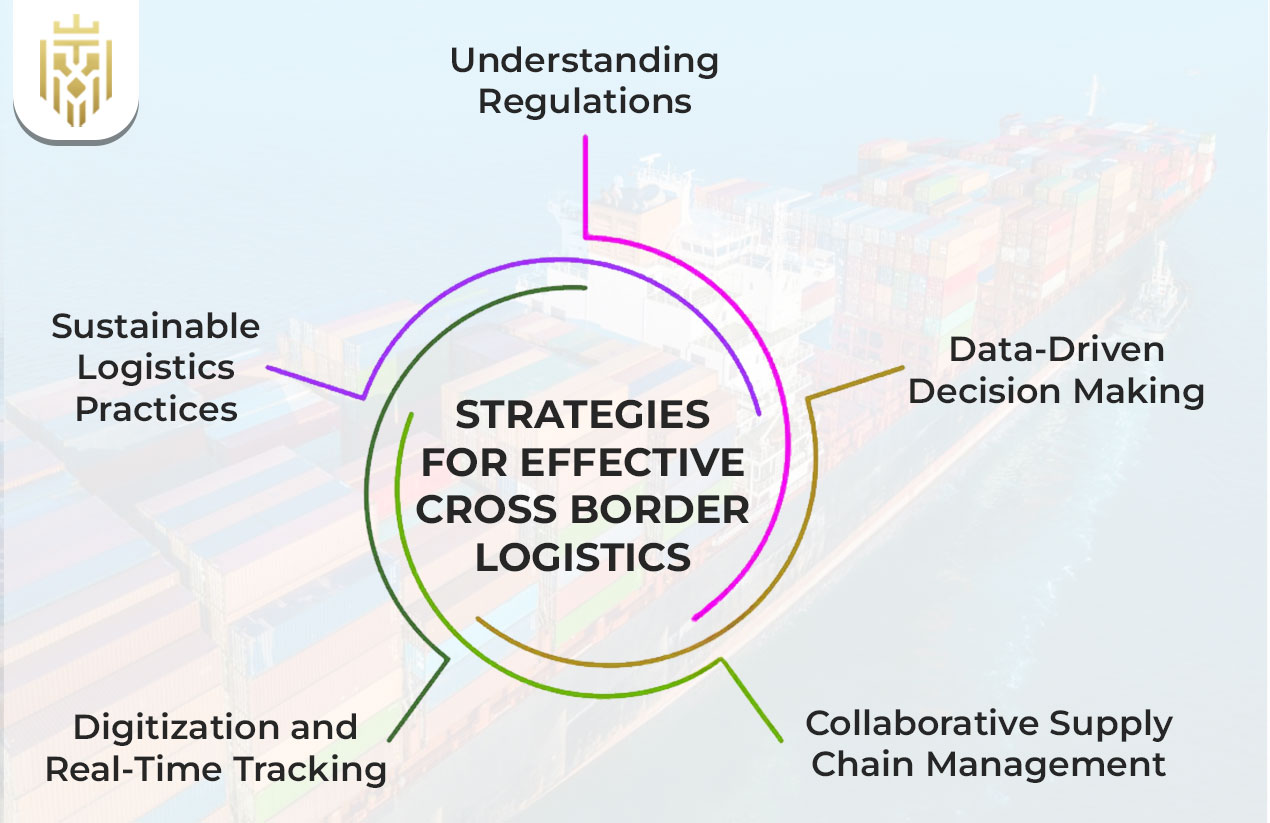
Initiating to comprehend global trade regulations is an essential step in the direction of getting the most out of cross border logistics management. Each nation comes up with its own set of rules with respect to tariffs, it is through documentation, labeling, and product quality standards. Regulatory astuteness can help the firms to be one step ahead and overcome the challenges before they arrive. Being up to date with free trade agreements and tariff cuts enables companies to choose routes wisely and thus make their operations cost-effective. This kind of management ease customs processing, checks, and tolerances thereby keeping the goods flowing without interruption.
Data-Driven Decision Making
In the logistics upturn, data is serving as the main support. Model-based forecasting coupled with analytics helps firms to take better, urgent, and more efficient steps that will lead to improved productivity. Management of cross border logistics is now data-driven, permitting businesses to examine shipment records, project needs, and select the best carriers. Logistic teams with real-time efficiency indicators can catch up on bottlenecks and put in place their remedies before the problems get bigger. This method of analysis if not only aiding in good cost management but is also contributing to delighting the customer via timely deliveries.
Collaborative Supply Chain Management
The cross border logistics depend on teamwork. The goods’ passage through various parts of the world encompasses the whole process of manufacturers, distributors, carriers, customs agents, and technology providers. The strong connection among the parties involved guarantees that they are well-coordinated and share information freely at all times during the supply chain. Besides, the joint management allows the firms to inform one another, eliminate overlapping activities and, when necessary, deal together with the interruption caused by factors like port strikes or regulatory changes. An integrated strategy leads to a logistics ecosystem that is more robust and adaptable, thus being able to adjust to the changing global market dynamics.
Digitization and Real-Time Tracking
Digitization has made a dramatic impact on express cross border logistics giving vaunting end-to-end visibility. Up-to-date logistics platforms are utilizing GPS tracking, cloud computing as well as IoT sensors for the shipment monitoring in real-time basis. Both customers and businesses can get real time information on the cargo’s status, location, and estimated delivery time. Besides, real-time tracking increases responsibilities and diminishes the chances of theft or losing items. Through the digital integration of all logistics stages, companies can go for the automation of manual processes, reduction of paperwork, and overall efficiency in the operations.
Sustainable Logistics Practices
The sustainability issue is topmost concern for the global logistics sector now. Companies are making gradual changes to their operations in the direction of environmental responsibility that do not compromise on profitability. Among the practices are the use of fuel-efficient trucks, renewable energy in warehouses, and route optimizations to cut emissions. Besides that, others are also looking into biodegradable packing materials and waste recycling. Making sustainability a part of international logistics reduces not only the environmental impact but also attracts consumers who prefer eco-friendly brands as they are willing to pay more.
Challenges in Cross Border Logistics
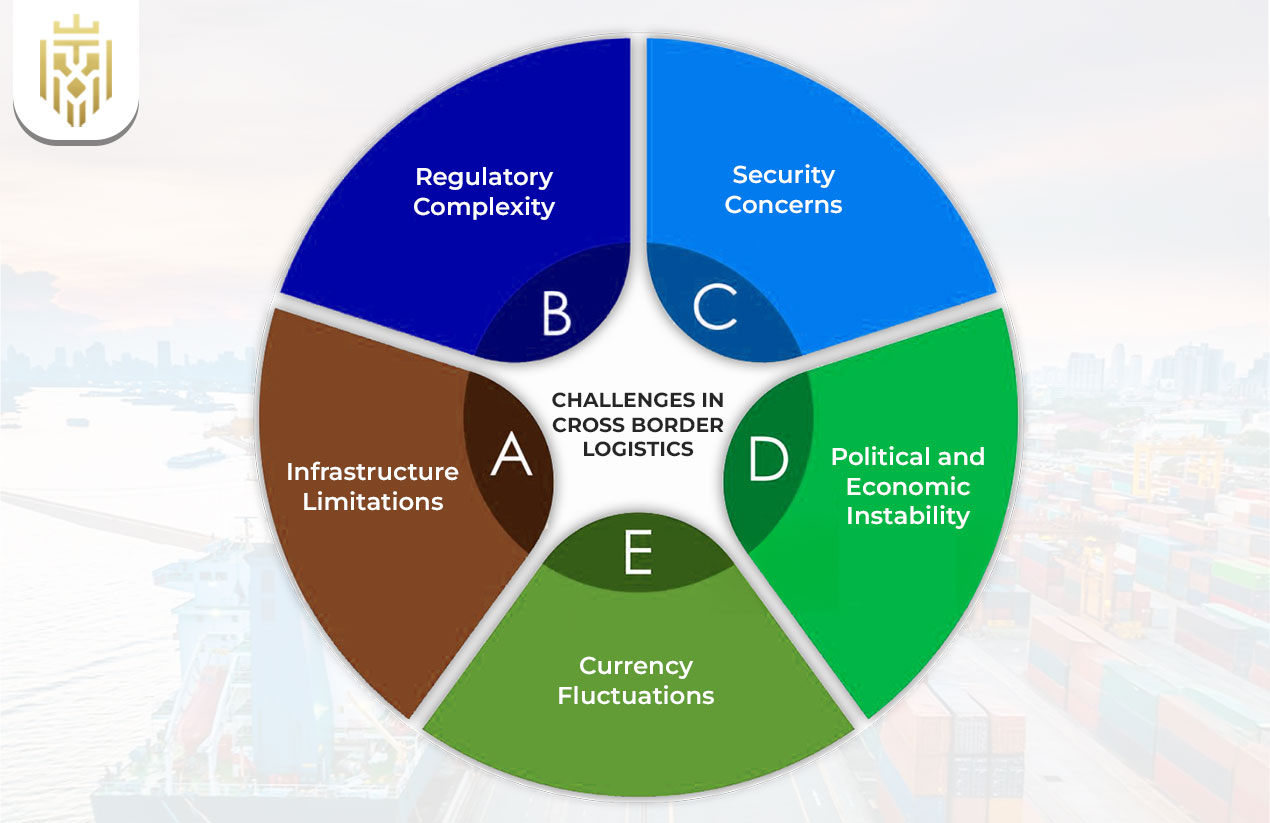
Infrastructure Limitations
One of the major challenges facing cross border logistics on that smooth road is the infrastructure. Old transport networks, congested ports, and limited warehouse capacity still exist in some regions making ithard for others vehicles to pass through. These restrictions sometimes inflates the cost of transportation and result in delays in delivery. The government and private sectors together can support each other in the modernization of the infrastructure by investing in advanced ports, road networks, and digital customs systems. Enhanced infrastructure leads to productivity increase, cost reduction, and facilitation of global competitiveness.
Regulatory Complexity
Facilitating the trade of international goods through a series of regulatory frameworks is the biggest challenge faced by businesses. Each and every country applies its own standards, tariffs, and documentation requirements. The compliance process is made even more difficult by constant changes. To tackle this issue, companies require expert knowledge, adaptable processes, and technology that automates compliance checks. Being aware of the situation and having open communication with customs authorities can minimize greatly the occurrence of disruptions and legal risks.
Security Concerns
Security concerns in cross border logistics have increased due to the various risks like theft, smuggling, and cyberattacks. The transit of goods, especially high-value shipments, needs to have very strong protection. The advanced tracking systems, tamper-proof seals, and secured warehousing are the main measures that help keep the cargo safe. The same is true for cybersecurity where digital systems are becoming the main backbone of logistics management. Data protection guarantees that sensitive information will not be accessed by breaches and unauthorized people.
Political and Economic Instability
The global trade is one of the most vulnerable markets to political and economic factors. The abrupt change of government policies, sanctions imposed, or a conflict in the region could result in the disruption of supply chains instantly. Inflation rates, economic downturns, or trade wars could also be the reason for the change in costs and demand. Thus, businesses will have to come up with contingency plans, alternate trade routes, and flexible logistics networks to cope with instability. Companies that recognize and plan for geopolitical risks will be the ones that can adjust their operations and continue to run them uninterrupted.
Currency Fluctuations
Currency instability can be seen as a double-edged sword; it impacts every area of the international business chain starting from pricing to profits. Exchanging rate changes can lead to unexpected cost increases or even reductions in profits on global contracts. To avoid such scenarios, firms frequently apply hedging tactics or even negotiate contracts in stable currencies. Proper financial management is the foundation of a predictable cash flow, and it also reduces the risk of being affected by the volatility in the market.
Sustainability
Eco-friendly Packaging
Packaging that is eco-friendly has turned into one of the main components of sustainable logistics. Businesses are switching over to biodegradable, recyclable or reusable materials instead of the traditional ones. This transition benefits the environment and at the same time companies are gaining stock in the market. Packaging trends such as lightweight materials and modular designs not only cut down waste but also provide the advantage of using less fuel by balancing the weight of the cargo. Eco-friendly packaging mirrors the logistics methods that are in correspondence with the global trend of environmental care and responsibility which is becoming more and more pronounced.
Carbon Foot Print Reduction
Cutting down on carbon emissions is the main focus for sustainable cross border logistics. Companies are really interested in electric or hybrid delivery vehicles, solar power or other renewable energy sources in warehouses, and data analytics for planning the most eco-friendly routes. Sharing the transportation of goods among different companies, where several shipments share the same transportation space, is another way of reducing emissions. Carbon footprint reduction measures can be seen as an indication of the company’s eco-friendliness which not only attracts environmentally conscious consumers but also corresponds to the world’s environment friendly activities.
FAQs
1. What is the difference between domestic and cross border logistics?
Domestic logistics is the transportation of goods within a single nation’s borders and is usually under local laws with shorter delivery times. Cross border logistics, however, refers to the movement of products internationally, where compliance with different countries’ regulations, customs procedures, and paperwork is required.
2. How do trade agreements impact cross border logistics operations?
Trade agreements facilitate global trade by cutting tariffs, aligning customs procedures, and fostering inter-country collaboration. They facilitate the logistics sector in moving goods faster and also in reducing costs, thus allowing delivery to be quicker and companies offering such products to be more competitive in the international marketplace.
3. What are sustainable practices in cross border logistics?
Sustainable practices are shipping materials that can be recycled, transportation routes that are planned in such a way to cause the least emissions, and warehouses that consume less energy and powered by renewables. These companies contribute to the environment less and at the same time operate more efficiently.
4. What role does data analytics play in cross border logistics management?
Data analytics allows the tracing of shipment success, expenses, and consumer actions. Logistic supervisors can spot inefficiencies, forecast demand, and justify improvements in service and cutting of delays by evaluating patterns and indicators. The use of data-driven information allows firms to be flexible and retain competitiveness in the ever-changing global logistics market.